
Two national parks. A coastline of empty beaches and sea caves. A village of world-class restaurants at the end of a dirt road. Most people have never heard of it — which is precisely the point.
Fifteen years ago this coastline was effectively unreachable. Getting here from San José meant ten to twelve hours of gravel, river crossings and faith. Then, in 2010, the Costanera Sur highway opened — and a place that had been left alone for a century became a three-hour drive.
What the highway didn't do was change it. The Southern Pacific — the Costa Ballena and the Osa Peninsula, running from Dominical down to the Panamanian border — is still the part of Costa Rica that never got developed. There are no high-rise resorts, no chain restaurants, no cruise terminals, no strips of souvenir shops. Roads are still red dirt. Howler monkeys still wake you before the alarm does. Whole beaches sit empty on a Tuesday.
If you have been to Guanacaste or Tamarindo in the north, you have seen a version of Costa Rica built for visitors — comfortable, well-run, and, to a lot of travelers, faintly familiar. This is the other one. The one that still belongs to the people who live here.

El Castillo sits almost exactly between them — ten minutes from a marine park that humpbacks visit twice a year, and forty-five minutes from what National Geographic called the most biologically intense place on Earth.
 10 minutes north
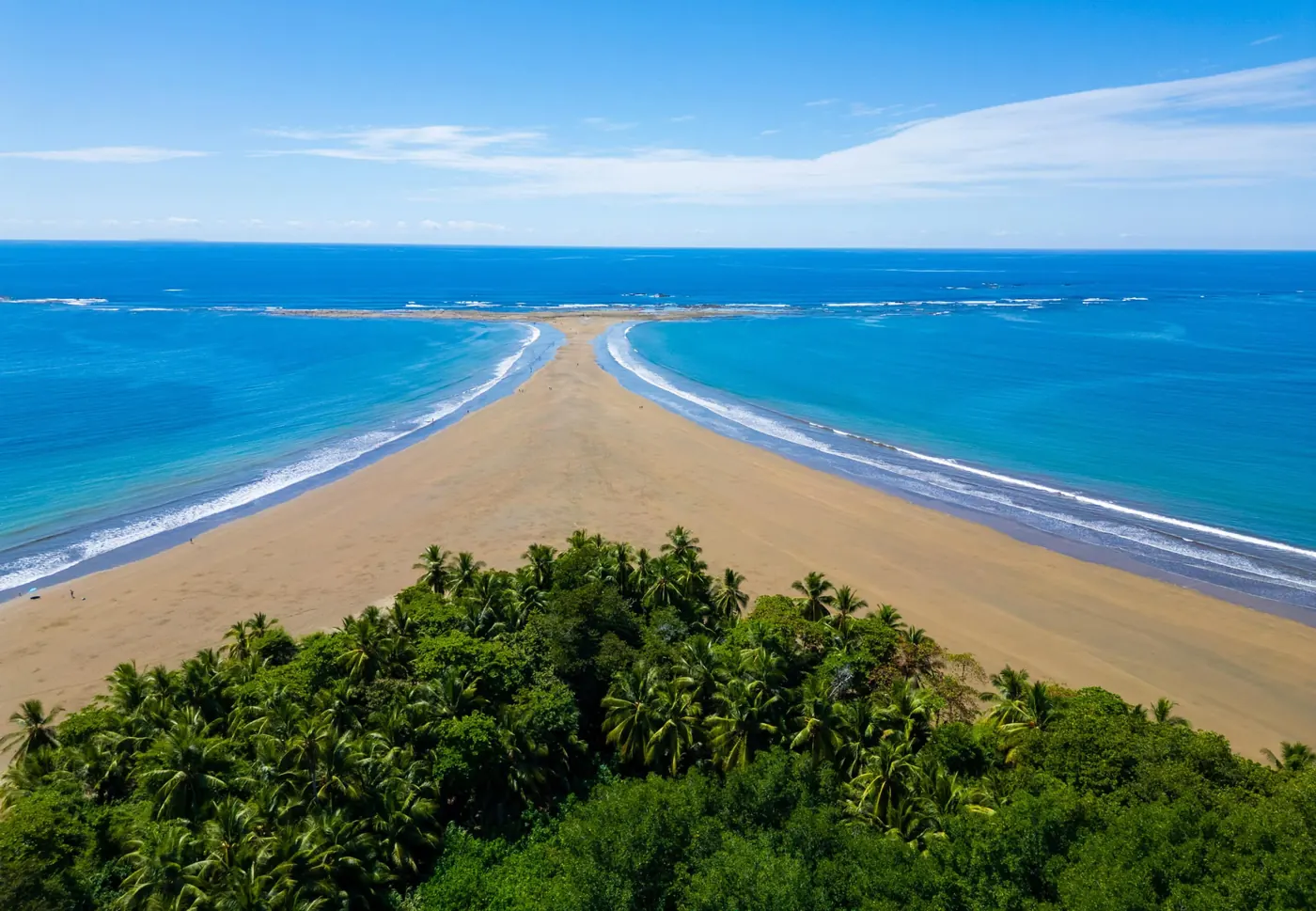
Thirteen thousand acres of protected ocean, the largest coral reef on the Pacific side of Central America, and a sandbar that emerges at low tide in the unmistakable shape of a humpback's fluke — pointing out to the very water the whales arrive in. You can walk out onto it.
Costa Rica's South Pacific has one of the longest humpback seasons anywhere on Earth, because it receives two entirely separate populations. The whales from the north arrive around December and stay through March; the whales from Antarctica come up between August and October. Between them, humpbacks calve for much of the year in water you can see from your balcony. Dolphins and sea turtles are here the whole year round.
Whale & dolphin watching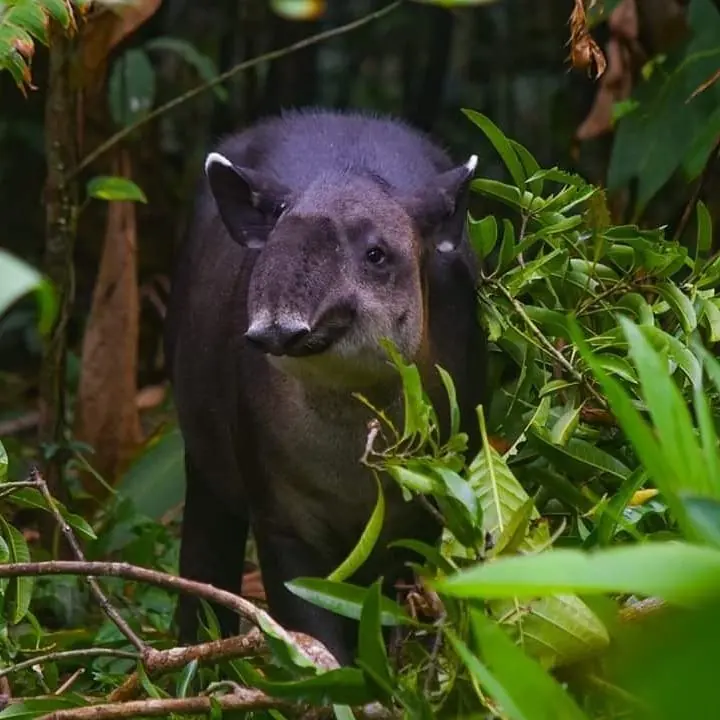 45 minutes south
That phrase isn't ours — it's National Geographic's, and once you have walked the Sirena trail it stops sounding like marketing. Corcovado protects 424 square kilometres of the Osa Peninsula, about a third of it, and is the last significant stretch of Pacific lowland rainforest left in Central America.
The Osa covers less than a thousandth of one percent of the planet's surface and holds more than two and a half percent of its biodiversity. Four species of monkey. Baird's tapir. Scarlet macaws in flocks rather than pairs. All four of Costa Rica's sea turtles. And the healthiest jaguar and puma populations in the country — which you almost certainly won't see, and will spend the whole day hoping you might.
Hiking Corcovado"The most biologically intense place on Earth in terms of biodiversity."National Geographic, on Corcovado National Park
 On the horizon
On a clear afternoon there is a low grey shape out on the Pacific, twenty kilometres off Drake Bay. That is Caño Island — a biological reserve with no hotels, no residents and no fishing, which is exactly why the water around it is the clearest on this coast.
Visibility routinely runs past twenty metres. White-tip reef sharks, eagle rays, sea turtles, whitetip and moray, enormous schools of jacks. Ashore, the island holds pre-Columbian stone spheres and burial sites nobody has fully explained — the same mysterious spheres UNESCO recognized as a World Heritage Site.
Boats leave from Sierpe, forty-five minutes south of us. Our team books it for you, and you are back on the terrace for sunset.
Snorkeling Caño IslandVentanas means windows. The sea spent several thousand years hollowing them out of the headland at the north end of the cove, and at low tide you can walk straight in — stand inside the rock with the Pacific framed in an arch of stone at the far end, sand under your feet, the sound completely changed.
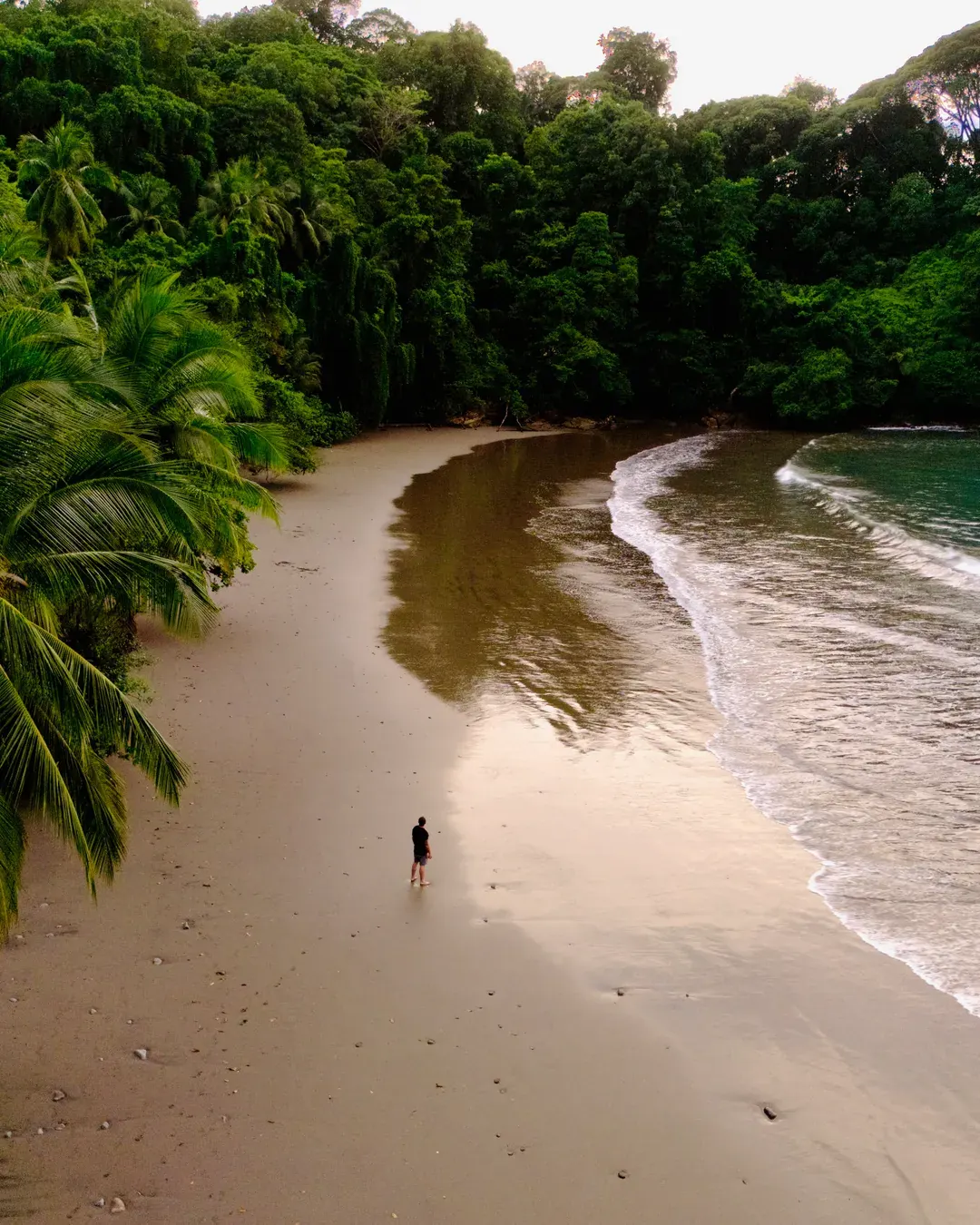
It is the closest beach to El Castillo and, by any reasonable measure, the most beautiful one on this coast. A half-moon of dark volcanic sand held between two jungled points, backed by palms and almond trees, with the headland rising at either end. The shape of the cove blocks most of the swell, so the water is calm enough to swim and clear enough to snorkel — unusual on a Pacific coast better known for surf.
There is nothing built on it. No hotel, no beach club, no vendors. On a weekday morning you are likely to have it to yourself apart from a family of Ticos with a cooler and a football, and the pelicans working the point.
Go at low tide. Our front desk will tell you the time before you leave — the caves close up when the water comes back in, and morning light is the best of the day for them.


The Costanera runs along the water the entire way, and every few minutes another cove opens up on your left. Each one is different. You could do a beach a day for a week and not repeat yourself.
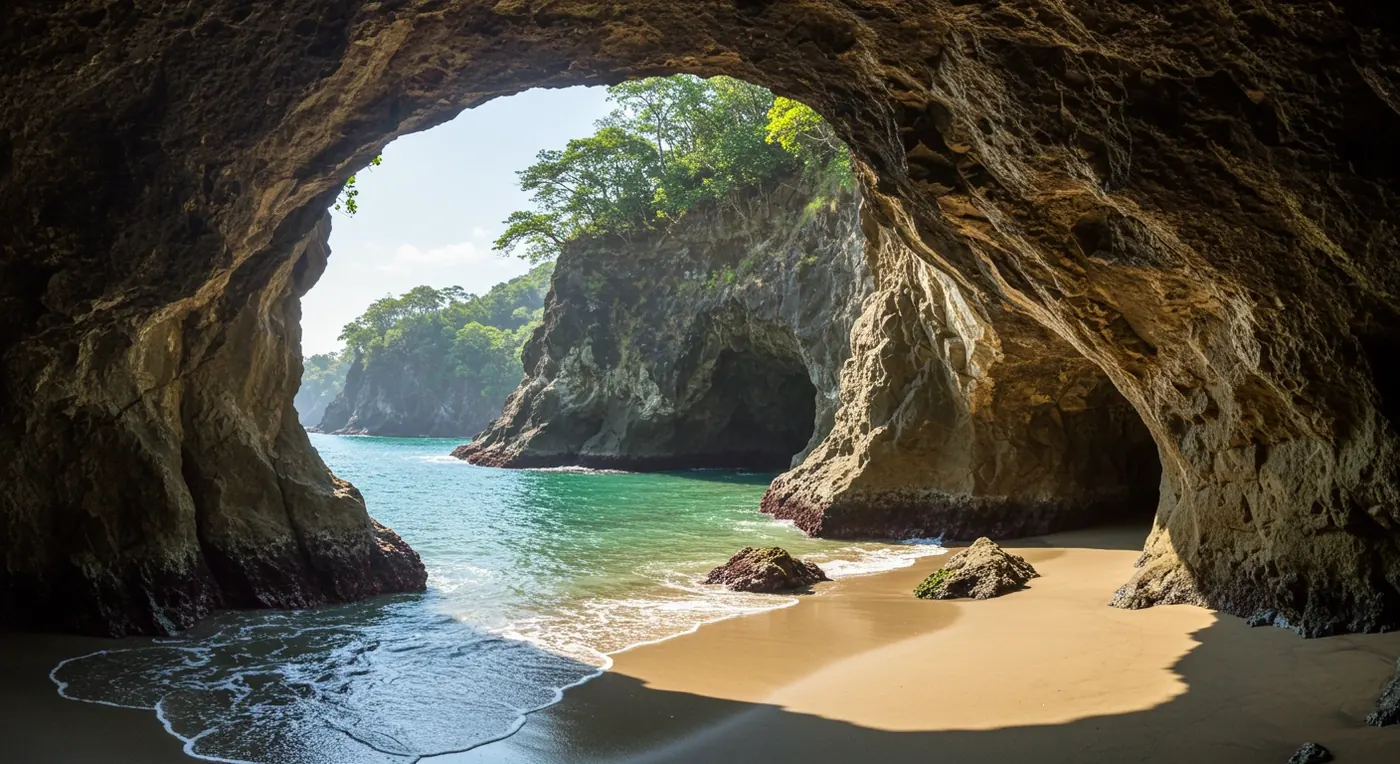
Ours. A sheltered half-moon cove with walk-in sea caves at the north end, calm water, dark sand and almost nobody on it. Go at low tide.
A small, pretty cove with moderate surf and a view of Isla Ballena sitting offshore. Rocky at high tide; the south end is the place to swim as the water drops.
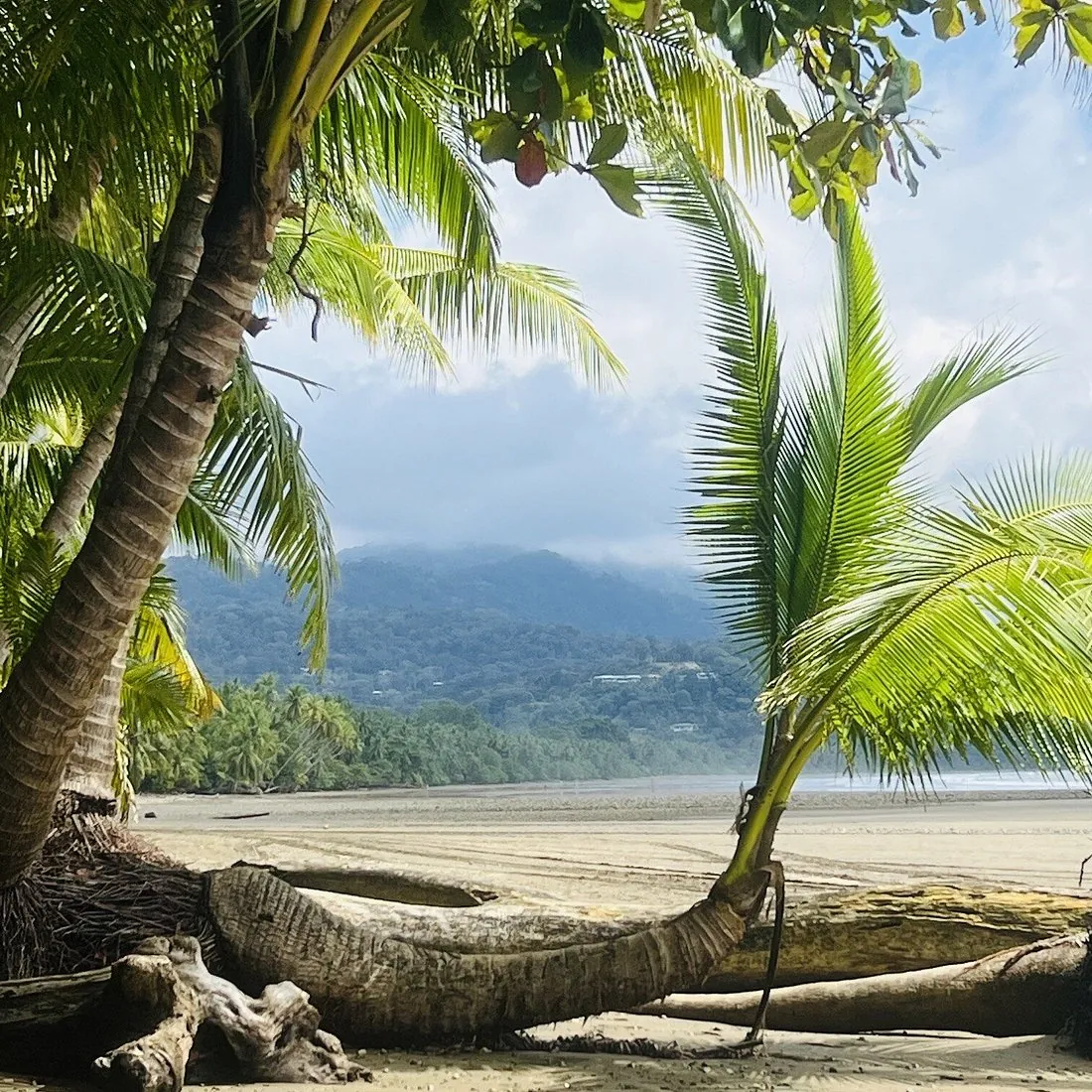
Fine sand, very little surf, and part of the marine park itself. Isla Ballena and the Tres Hermanas rocks sit just offshore — this is the beach to bring a book to.
The famous one. Long, safe to swim, threaded with estuaries and mangrove channels — and at its tip, the Whale's Tail sandbar you can walk out onto at low tide. Best beach here for horseback riding.
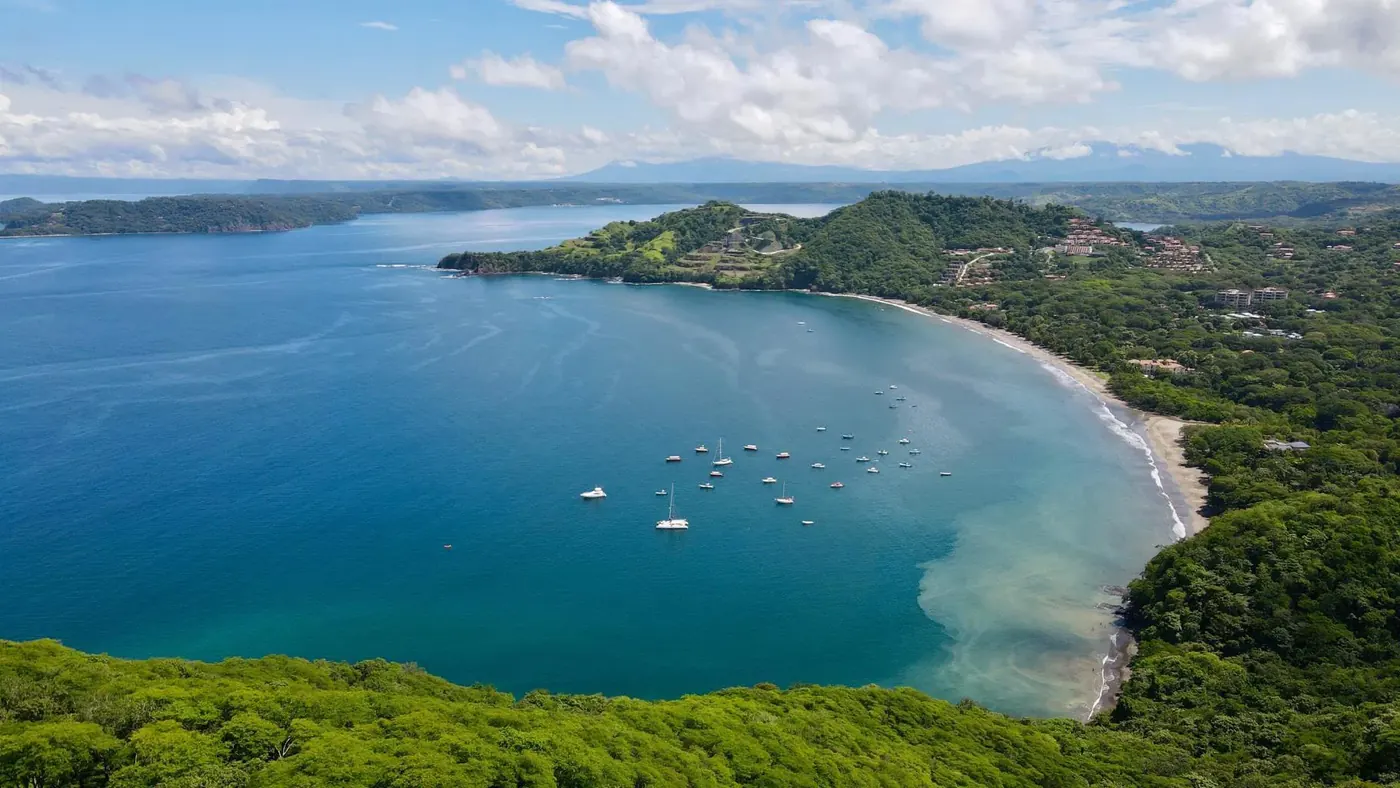
A long open stretch under the Fila Costeña mountains, joined to Uvita by the Whale's Tail. Walk it at low tide for the tide pools — crabs, small fish, molluscs, and hardly a footprint.
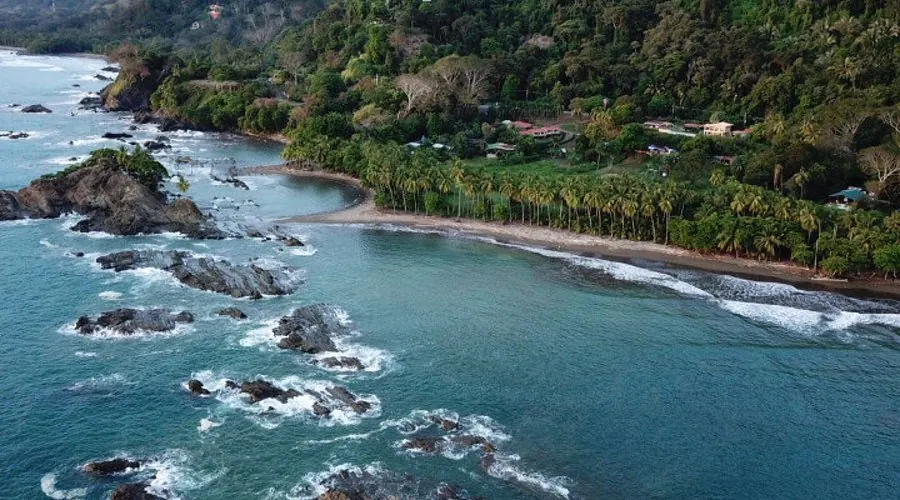
Gentler than its big brother up the road. Moderate surf, good swimming, kayaks and paddleboards — and Punta Dominical at the south end, a forested headland worth the climb.
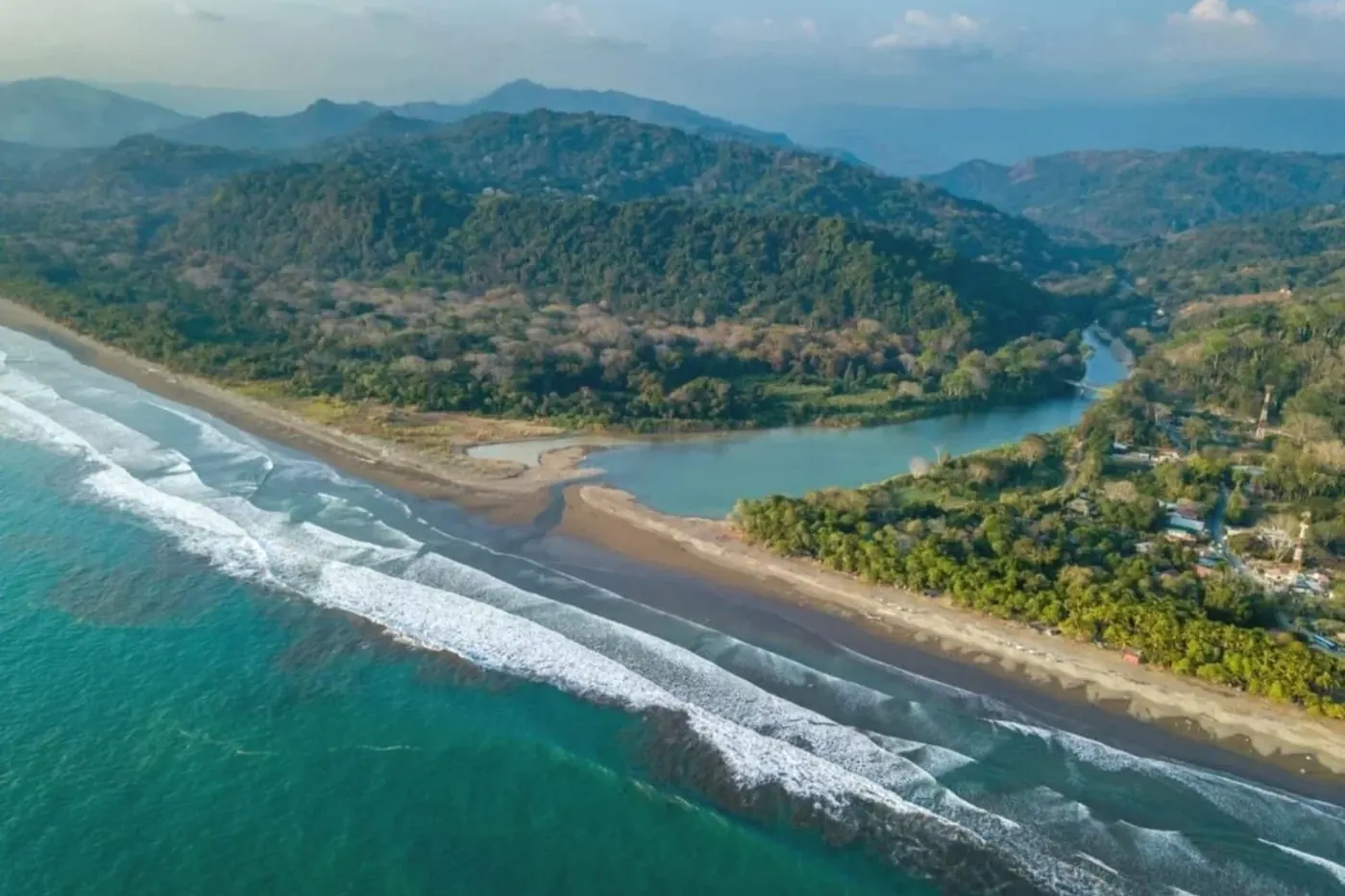
Serious waves and a serious surf town behind them — consistent year-round, best for experienced surfers. Also the coast's most alive strip of restaurants, shops and evening music.
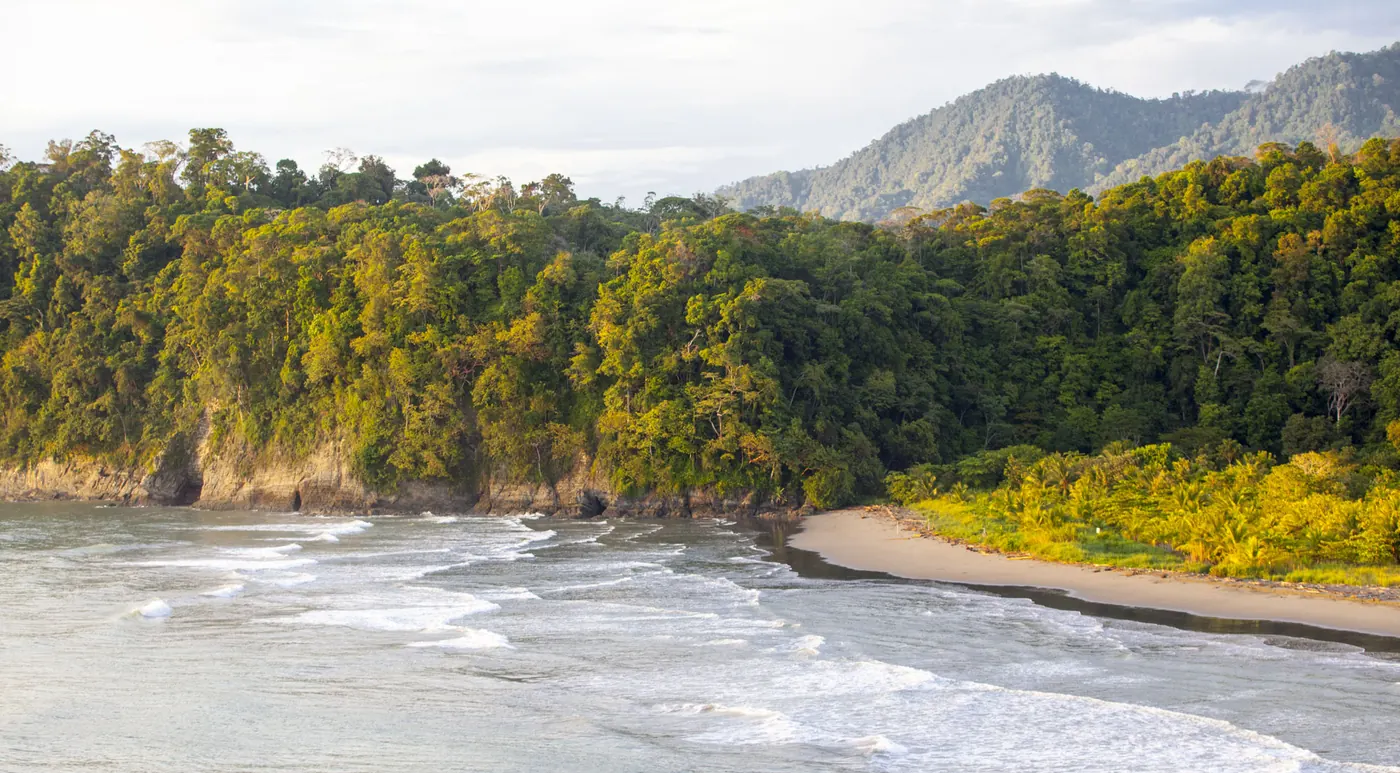
Ojochal's own beach, where the Río Térraba estuary meets the sea. Wild, driftwood-strewn and rich with birdlife; a local conservation project protects the turtles that nest here.
A quarter of a mile past the village sign, up a dirt road called Calle Perezoso — Sloth Street, and the name is accurate. Around three hundred people, no traffic light, no supermarket chain, and an entirely disproportionate number of very good restaurants. Ojochal is the reason people who know this coast keep coming back to it.
The busiest of the local towns without ever feeling busy. Farmers' market on Saturdays, the gateway to Marino Ballena, and home to the Envision festival each spring. Good for provisions, better for people-watching over a coffee.
Barefoot surf town. Sand streets, roadside vendors, a genuinely fun main drag of bars, taco joints and shops, and a beach break that draws surfers year-round. The best day trip on the coast if you want a bit of noise.
Banana country, ringed by forested mountains. Cross the old steel bridge over the Río Grande de Térraba to Palmar Sur and you reach Finca 6 — the museum built around the pre-Columbian stone spheres, perfectly round, purpose unknown, and a UNESCO World Heritage Site.
A river town on the edge of the largest mangrove system in Central America, and the launching point for Caño Island and Corcovado. Boats leave from the dock; scarlet macaws come over the water at dusk. Lunch at the riverside restaurants is part of the trip.
Cascada Pavón is ten minutes from the hotel — a short trail, stone steps, a swimming pool at the bottom and a rock the local kids jump off. No guide, no fee. Nauyaca, forty minutes north, is the famous one: a two-tier fall of 150 and 65 feet into a crystalline pool, reached on foot or on horseback. We'll arrange either.
Ojochal is widely called the culinary capital of Costa Rica. It has no stoplight, no bank and no supermarket. What it has is a couple of dozen restaurants — and several of them would be talked about in any city in the world.
The reason is a genuine accident of history. Beginning in the 1970s, Ojochal was settled largely by French-speaking Canadians and Europeans who came for the jungle and stayed for good. They brought their kitchens with them. Two generations later the village runs on French, Belgian, Indonesian, Mediterranean and Costa Rican cooking, almost all of it in small owner-operated rooms where the chef is the person who greets you.
What makes it work is what's outside. Yellowfin and mahi landed that morning at Sierpe. Prawns from the estuary. Hearts of palm, plantain, cacao, vanilla, pejibaye and half a dozen fruits with no English name, grown within a few kilometres. It is an unusually good larder, in an unusually remote place, in the hands of unusually serious cooks.
Dinners here are not a formality between activities. They are one of the reasons to come. Our team knows every kitchen in the village, knows which nights they open, and will book the table and arrange the drive — the roads are dark and unmarked, and it's a five-minute trip we'd rather handle for you.
And on the nights you'd rather not move at all, Chef Yostin Muñoz is cooking upstairs with the same ingredients and a better view.
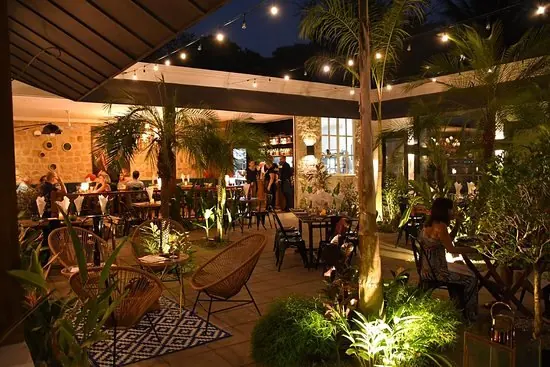
The best known restaurant in the village and the one most often called the finest on the coast — French technique, tropical ingredients, and a candlelit courtyard of palms and low lanterns.
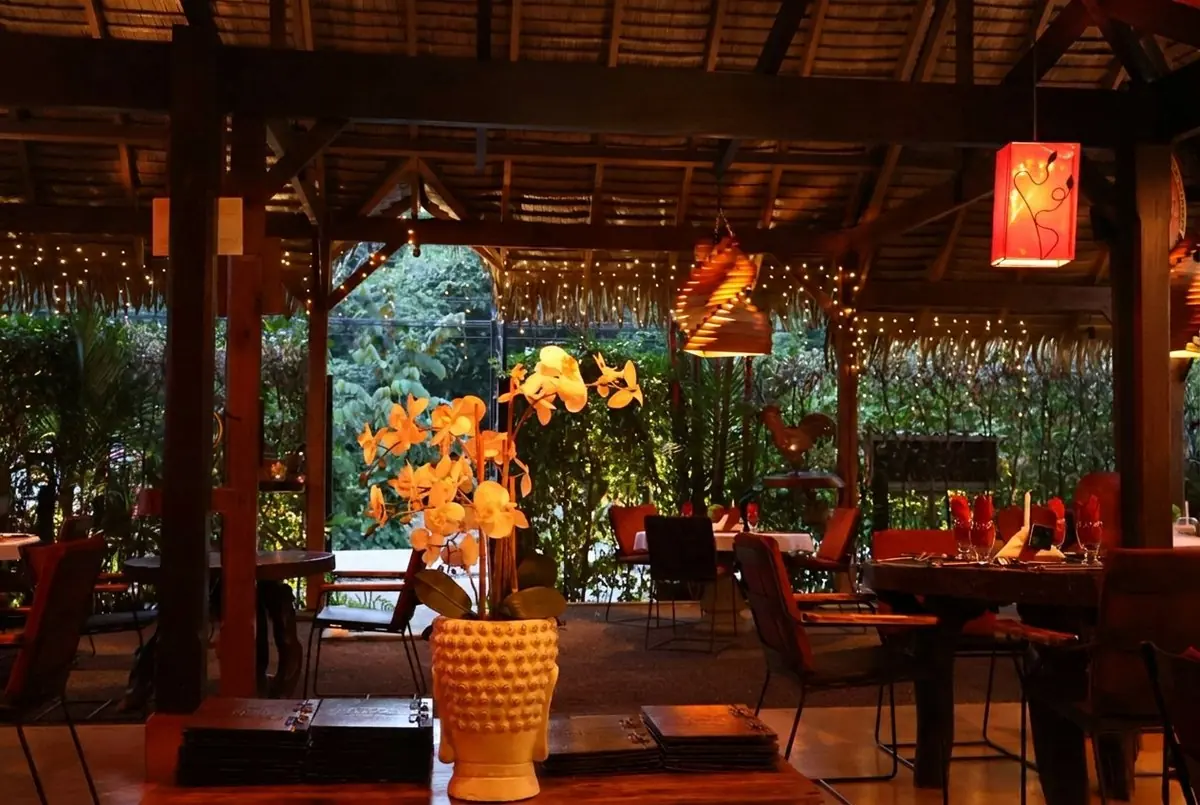
Eight or nine tables open to the jungle, run by a host who has been doing it for decades. Small, personal, and the meal most guests talk about on the way to the airport.
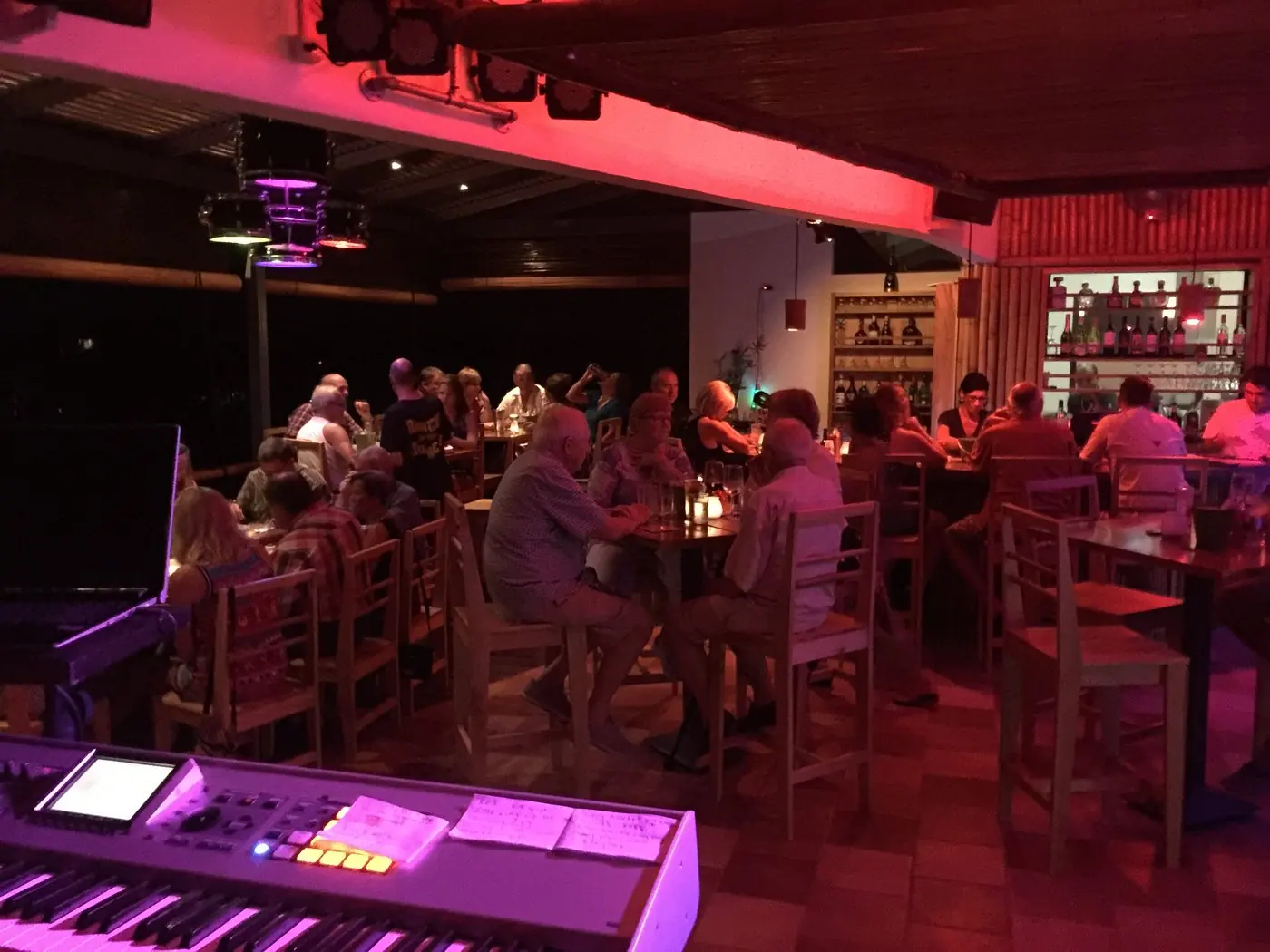
High on the ridge, with the sunset on one side and a band on the other. Live music most nights, a menu that runs from tuna tartare to fish and chips, and the closest thing Ojochal has to a night out.
These three are a starting point. Ask us for the full list — it changes with the season, and we eat at all of them.
Everything below is bookable through our front desk, and everything below is within easy reach of the hotel. These are not filler excursions — they are, consistently, among the highest-rated outdoor experiences in Costa Rica.
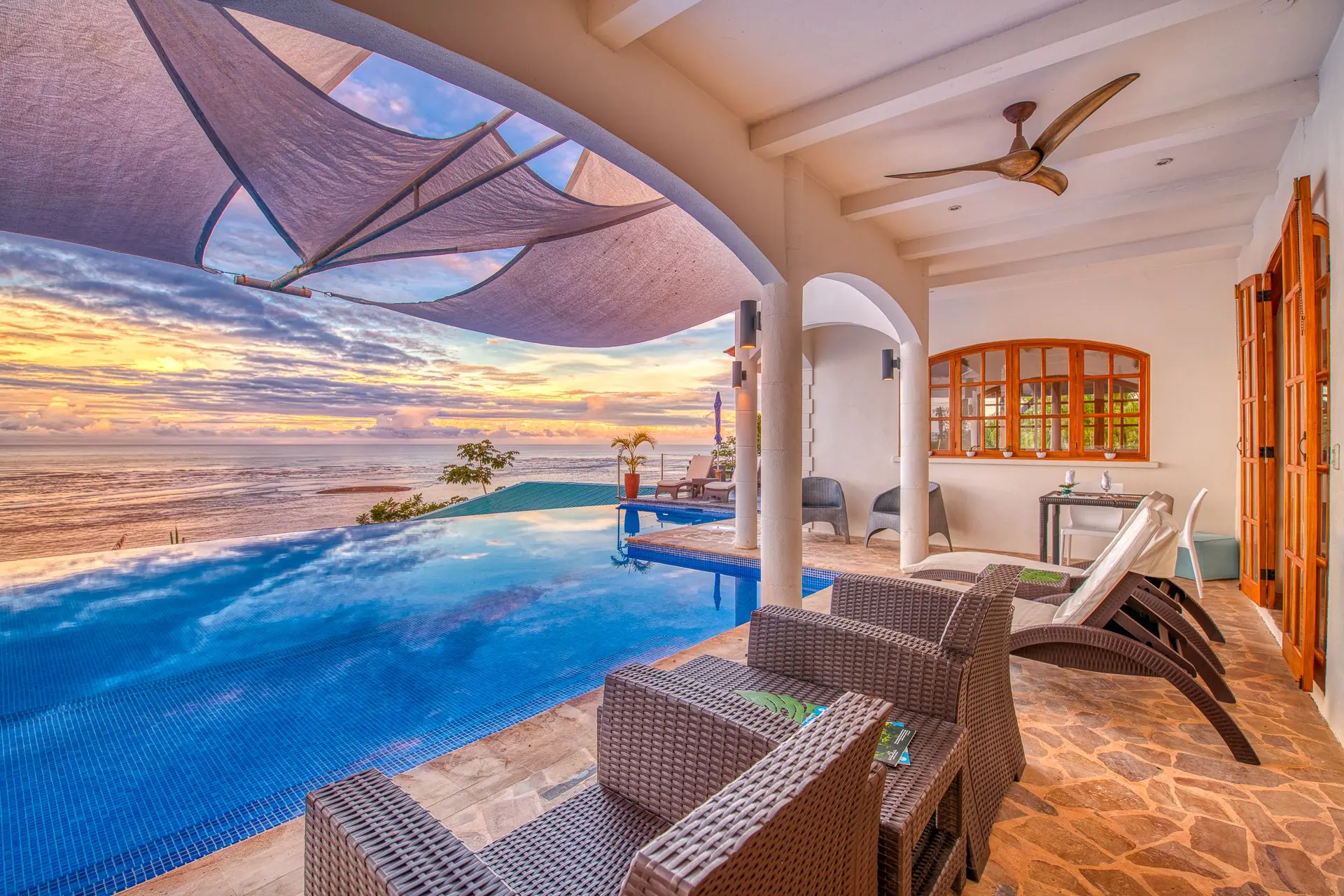
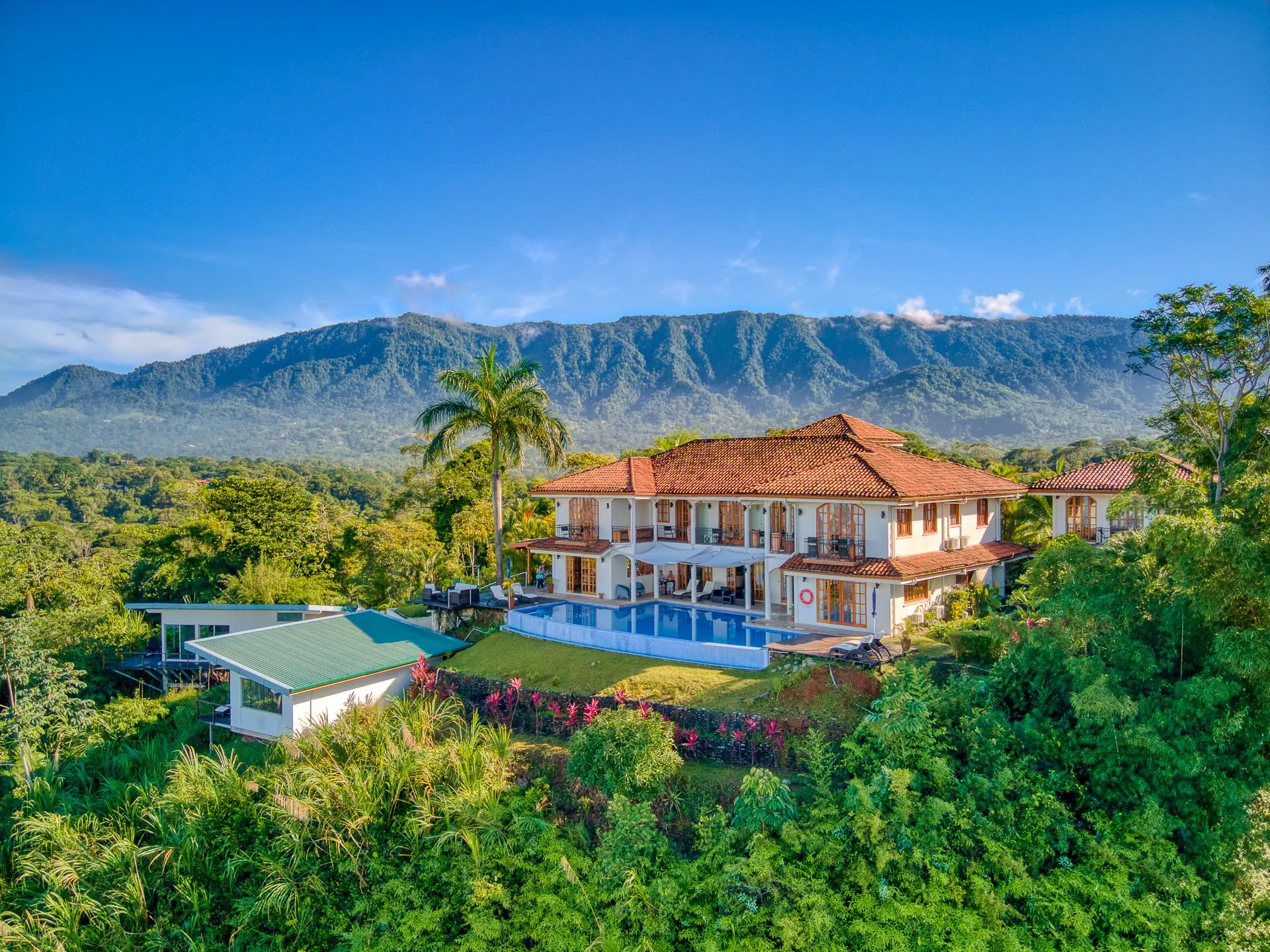
Nine rooms, three hundred feet above the Pacific, at the end of a road called Sloth Street.
Check Availability